The main idea behind these networks is to make everyday systems more aware and responsive. By collecting real-time data, they help monitor environments and support better decision-making. This is especially useful in situations where manual monitoring is difficult or time-consuming.
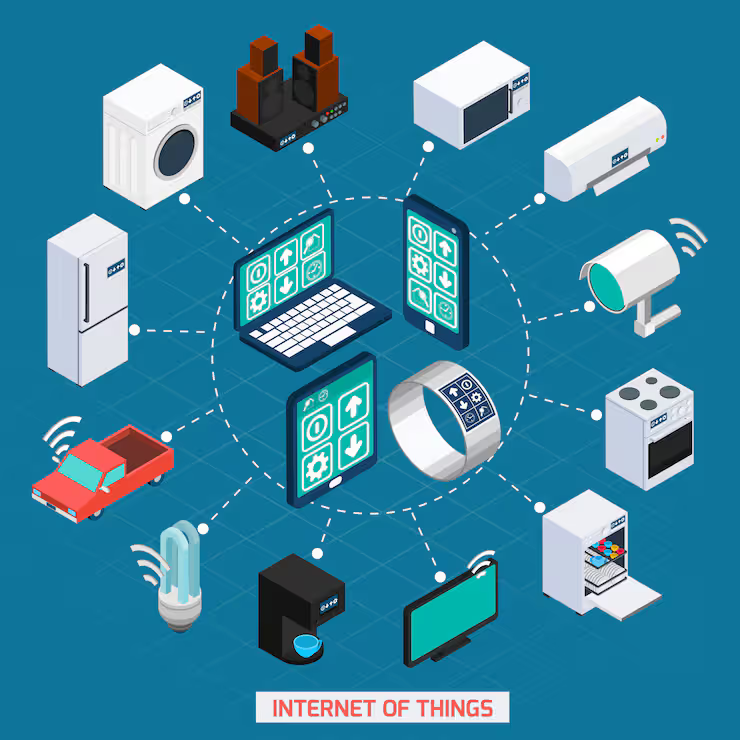
A typical IoT sensor network includes sensors, communication devices, gateways, and a central system where data is processed. The sensors gather information, transmit it through a network, and the data is then stored or analyzed for further action.
These networks are widely used in areas like agriculture, healthcare, smart homes, industrial automation, and environmental monitoring. Their ability to provide continuous insights makes them valuable in both small-scale and large-scale applications.
Why IoT sensor networks matter in today’s world
IoT sensor networks have become increasingly important as systems grow more complex and data-driven. They play a key role in improving efficiency, safety, and convenience across different sectors.
Enhancing real-time monitoring
One of the biggest advantages is the ability to monitor conditions in real time. Whether it is tracking air quality or equipment performance, these networks provide up-to-date information that helps in quick decision-making.
Improving operational efficiency
By automating data collection, IoT sensor networks reduce the need for manual checks. This leads to faster processes and fewer errors. Organizations can use the collected data to optimize performance and reduce waste.
Supporting smart environments
These networks are a foundation for smart environments such as smart homes and smart cities. They allow systems to respond automatically to changes, like adjusting lighting or managing energy usage.
Benefiting multiple industries
IoT sensor networks are used in various fields:
- Agriculture for soil and weather monitoring
- Healthcare for patient tracking and wearable devices
- Manufacturing for equipment monitoring
- Logistics for tracking goods and storage conditions
- Environmental management for pollution and climate monitoring
Solving common challenges
They help address issues such as:
- Lack of real-time data
- Inefficient resource usage
- Delayed response to problems
- Difficulty in monitoring remote locations
By solving these challenges, IoT sensor networks contribute to more reliable and efficient systems.
Recent trends shaping IoT sensor networks
The development of IoT sensor networks continues to accelerate with advancements in technology and changing needs. Several trends have gained attention recently.
Growth of edge computing
Edge computing allows data to be processed closer to where it is collected, rather than sending everything to a central system. This reduces delays and improves response time, especially in critical applications.
Expansion of low-power networks
Technologies designed for low power consumption are becoming more common. These allow sensors to operate for longer periods without frequent battery replacement, which is important for remote or hard-to-reach locations.
Integration with artificial intelligence
IoT systems are increasingly being combined with artificial intelligence. This helps in analyzing large amounts of data and identifying patterns, making the networks more intelligent and predictive.
Improved connectivity options
New communication technologies are improving how devices connect and share data. This includes better wireless coverage and more reliable connections across different environments.
Focus on security enhancements
As more devices become connected, security has become a major concern. Recent developments focus on protecting data and preventing unauthorized access to IoT systems.
Regulations and policies influencing IoT systems
IoT sensor networks are affected by various regulations that aim to ensure safety, privacy, and proper usage of data. These policies differ by region but share common objectives.
Data protection and privacy rules
Since IoT devices collect and transmit data, privacy regulations play a key role. These rules ensure that personal and sensitive information is handled responsibly and securely.
Communication and spectrum regulations
Wireless communication used by IoT devices must comply with spectrum regulations. These rules manage how frequencies are used to avoid interference and ensure reliable communication.
Industry-specific guidelines
Certain industries have their own regulations for using IoT systems. For example, healthcare and manufacturing sectors often have strict standards for safety and data accuracy.
Cybersecurity requirements
Policies are being introduced to strengthen the security of connected devices. These include guidelines for encryption, authentication, and secure data transmission.
Environmental considerations
Some regulations focus on reducing electronic waste and improving energy efficiency. This encourages the development of sustainable IoT devices and networks.
Tools and resources for better performance
There are many tools and resources available to help design, manage, and optimize IoT sensor networks. These tools make it easier to build efficient and reliable systems.
Development platforms
- Hardware platforms for building and testing sensor devices
- Software frameworks for connecting and managing devices
- Simulation tools for testing network performance
Monitoring and analytics tools
- Dashboards for visualizing sensor data
- Data analysis platforms for identifying trends
- Alert systems for detecting unusual conditions
Connectivity solutions
- Wireless communication modules for device connectivity
- Gateway devices for data transmission
- Network management tools for monitoring connectivity
Security tools
- Encryption tools for protecting data
- Authentication systems for controlling access
- Security testing tools for identifying vulnerabilities
Learning and documentation
- Online tutorials and guides
- Technical documentation from device manufacturers
- Community forums for troubleshooting and discussion
Using these resources can help improve system design, performance, and reliability.
Frequently asked questions
What is an IoT sensor network?
It is a system of connected sensors that collect and share data about physical conditions. The data is transmitted through a network and used for monitoring and analysis.
How do IoT sensors communicate with each other?
They communicate using wired or wireless technologies such as Wi-Fi, Bluetooth, or specialized low-power networks. Data is often sent to a central system through gateways.
What are the main components of an IoT sensor network?
The main components include sensors, communication modules, gateways, and data processing systems. Each part plays a role in collecting, transmitting, and analyzing data.
Are IoT sensor networks secure?
Security depends on how the system is designed and managed. Using proper encryption, authentication, and regular updates can help improve security.
Where are IoT sensor networks commonly used?
They are used in many areas, including agriculture, healthcare, smart homes, industrial automation, and environmental monitoring.
Final thoughts
IoT sensor networks are an important part of modern technology, helping systems become more responsive and data-driven. They enable real-time monitoring, improve efficiency, and support smarter decision-making across various industries.
With ongoing advancements in connectivity, computing, and security, these networks continue to evolve and become more capable. At the same time, regulations ensure that they are used responsibly and safely.
Understanding how IoT sensor networks work and how to optimize their performance can help individuals and organizations make better use of this technology. With the right approach and tools, they can support more efficient and reliable systems in everyday life.