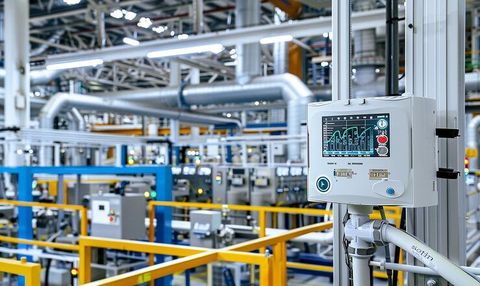
Discover Industrial Sensors Knowledge with Useful Tips and Advice
Industrial environments are becoming smarter and more efficient every day. At the heart of this transformation lies a simple yet powerful technology: industrial sensors. These devices quietly collect and transmit information, helping machines and systems respond accurately to real-world conditions.
If you're curious about how these sensors work, where they are used, and how to understand them better, this guide will walk you through everything in a clear and friendly way.
What Are Industrial Sensors?
Industrial sensors are devices that detect physical changes in the environment and convert them into signals that machines can understand. These changes might include temperature, pressure, motion, light, or even chemical composition.
Think of them as the “eyes and ears” of industrial systems. Without sensors, machines would have no way of knowing what’s happening around them.
For example, a temperature sensor can detect heat levels inside a machine and signal if things are getting too hot. This helps prevent damage and keeps operations running smoothly.
Why Are Industrial Sensors Important?
Industrial sensors play a key role in modern industries. They help systems operate safely, efficiently, and accurately.
Here are a few reasons why they matter:
Improved Efficiency
Sensors provide real-time data, allowing machines to adjust their performance instantly. This reduces waste and improves productivity.
Enhanced Safety
By detecting unusual conditions like high pressure or overheating, sensors can help prevent accidents.
Better Decision-Making
Accurate data from sensors allows operators to make informed decisions instead of relying on guesswork.
Automation Support
Sensors are essential for automated systems. They help machines perform tasks without constant human supervision.
Common Types of Industrial Sensors
There are many types of industrial sensors, each designed for specific tasks. Let’s explore some of the most widely used ones.
Temperature Sensors
These sensors measure heat levels in machines, materials, or environments. They are commonly used in manufacturing, food processing, and energy systems.
Examples include:
Thermocouples
Resistance Temperature Detectors (RTDs)
Pressure Sensors
Pressure sensors monitor the force applied by liquids or gases. They are often used in pipelines, hydraulic systems, and storage tanks.
They help ensure systems operate within safe limits.
Proximity Sensors
Proximity sensors detect the presence or absence of an object without physical contact. They are widely used in automation and assembly lines.
Types include:
Inductive sensors
Capacitive sensors
Ultrasonic sensors
Motion Sensors
Motion sensors detect movement in a specific area. They are useful in robotics, security systems, and conveyor operations.
Level Sensors
These sensors measure the level of liquids or solids in containers. They are commonly used in water treatment, agriculture, and chemical industries.
Light Sensors
Light sensors measure brightness or detect light intensity. They are often used in quality control processes and automated lighting systems.
How Industrial Sensors Work
Detection: The sensor detects a physical change (like heat or pressure).
Conversion: It converts that change into an electrical signal.
Transmission: The signal is sent to a control system.
Response: The system processes the data and takes action if needed.
Where Are Industrial Sensors Used?
- Manufacturing: Sensors help monitor machines, track production, and ensure quality. They are essential in automated assembly lines.
- Energy and Power: In power plants, sensors monitor temperature, pressure, and flow to maintain safe and efficient operations.
- Agriculture: Sensors are used to monitor soil moisture, temperature, and environmental conditions, helping improve crop management.
- Healthcare Equipment: Certain industrial sensors are used in medical devices to measure vital parameters and ensure accuracy.
- Transportation: Sensors play a role in vehicle systems, traffic monitoring, and logistics operations.
Useful Tips for Understanding Industrial Sensors
- Start with the Basics: Focus on understanding what each sensor measures. Once you know the purpose, the technical details become easier to grasp.
- Learn Through Real Examples: Try connecting sensor types to real-world situations. For instance, think of how a temperature sensor works like a thermometer.
- Pay Attention to Accuracy: Different sensors have different levels of precision. Knowing how accurate a sensor is can help you understand its role in a system.
- Understand the Environment: Sensors are designed for specific conditions. Some work better in extreme heat, while others are suited for clean environments.
- Keep It Simple: You don’t need to understand complex formulas to grasp how sensors work. Focus on the core idea: detecting and responding to changes.
Challenges Associated with Industrial Sensors
While industrial sensors are highly useful, they do come with certain challenges.
- Environmental Factors: Dust, moisture, and extreme temperatures can affect sensor performance.
- Calibration Needs: Sensors need to be calibrated regularly to maintain accuracy.
- Signal Interference: Electrical noise or interference can sometimes disrupt sensor signals.
- Maintenance Requirements: Even though sensors are durable, they still need proper maintenance to function effectively.
Future Trends in Industrial Sensors
Industrial sensors are evolving rapidly as technology advances. Here are some trends shaping their future:
Smart Sensors
Modern sensors are becoming smarter, with built-in processing capabilities. They can analyze data and make decisions without relying entirely on external systems.
Integration with IoT
Sensors are increasingly connected to the Internet of Things (IoT), allowing remote monitoring and control.
Wireless Technology
Wireless sensors reduce the need for complex wiring and make installation easier.
Miniaturization
Sensors are becoming smaller while maintaining high performance, making them suitable for compact systems.
Data-Driven Insights
With advanced analytics, sensor data is now used to predict issues before they occur, improving reliability.
Practical Advice for Beginners
If you’re just starting to explore industrial sensors, here are a few practical suggestions:
- Observe Real Systems: Look at how sensors are used in everyday machines or industrial setups. This builds practical understanding.
- Ask Questions: If something isn’t clear, don’t hesitate to ask or research further. Curiosity helps you learn faster.
- Focus on Function, Not Complexity: Instead of getting lost in technical terms, focus on what the sensor does and why it’s needed.
- Build Gradually: Start with simple sensors and gradually move to more complex ones as your understanding improves.
Conclusion
Industrial sensors may seem like small components, but they play a massive role in modern industry. They help machines understand their environment, improve efficiency, and maintain safety. By learning the basics, exploring different types, and understanding how they are used, you can build a solid foundation of knowledge. Whether you're a student, a professional, or simply curious, understanding industrial sensors opens the door to a smarter and more connected world.
With the right approach and a bit of curiosity, these devices become much easier to understand and far more fascinating than they first appear.

Related Post...


Discover Artificial Intelligence Knowledge with Useful Tips and Advice
Updated: April 21, 2026
Read More